Showing posts with label Thats capitalism. Show all posts

Sunday, May 22, 2011

Deng Xiaoping's Capitalism

Very interesting historical analysis on Deng Xiaoping's bringing of capitalism to China and its consequences by Mark Sumner, the quote below is from the end of the article:
"Daily Kos: Owners of the world, unite:  It's become popular to view American workers in the decades after World War II as "highly paid." The truth is they were "rightly paid," with incomes that tracked well against the value of the products they produced. This was only possible because of the tight alignment between workers salaries and the price of goods.    
"Rather than organize an international revolt of workers, Deng generated a conspiracy of business leaders willing to devalue their work force. He showed CEOs that they could become fabulously wealthy if they only reduced their companies to nothing more than nameplates and outlets – brand names for China Inc. He showed them that they could profit from the destruction of their own system. What we took as economic victory was really an invitation to economic suicide, and corporations lined up to jump. 
Deng and the leaders who followed him rightly judged that we would overlook any abuses for money. That we would not severe relationships no matter how radical their actions. That we would mouth platitudes about the connection between capitalism and democracy, long after we were fully aware that no such relationship existed."
I only disagree slightly with a minor point mentioned here.  American workers may have been better paid in the decades after WWII, but they still produced surplus value and were still exploited.  They, CEOs, are profiting as normal from "their system" and not necessarily destroying it.  Like most establishment liberals, Sumner still takes capitalism as a system for granted.   

Saturday, May 21, 2011

We Are the Radical Media! So Fuck Off!

From the Red Pepper, UK:


On 8 and 9 October, Red Pepper will be part of a collective of radical media organisations hosting a conference featuring speakers including Michael Albert and John Pilger. We were going to call it the 'Radical Media Conference', but then we got a 'cease and desist' letter from the lawyers of a US advertising agency...


How Rich Are The Super Rich? Really Fucking Rich!

Absurdly so, and it should piss you off!
Many people don’t understand our country’s problem of concentration of income and wealth because they don’t see it. People just don't understand how much wealth there is at the top now. The wealth at the top is so extreme that it is beyond most people’s ability to comprehend. 

If people understood just how concentrated wealth has become in our country and the effect is has on our politics, our democracy and our people, they would demand our politicians do something about it. 
How Much Is A Billion? Some Wall Street types (and others) make over a billion dollars a year – each year. How much is a billion dollars? How can you visualize an amount of money so high? Here is one way to think about it: The median income in the US is around $29,000, meaning half of us make less and half make more. If you make $29,000 a year, and don’t spend a single penny of it, it will take you 34,482 years to save a billion dollars. . . . (Please come back and read the rest of this after you have recovered.)


Friday, May 20, 2011

The Folly of the Individual Choice Model of Social Change

NPR today has a feature on well meaining folk who motivated by the Deep Horizon oil spill, have decided to attempt to give up oil.


"As many Americans struggle with higher gas prices, others look for ways to live using fewer fossil fuels. They pursue a personal form of energy independence — and they are finding that it's no easy feat.
About a year ago, following the Deepwater Horizon oil rig catastrophe that released millions of barrels of oil into the Gulf of Mexico, Mary Richert decided that she wanted to live a life free of oil. "I quit," she told American Public Media's radio program Marketplace. "I just want to stop using oil completely. I just don't want to ever see it or think about it again."
So she set out on a journey to give up gasoline. Every day, Richert, 28, a project manager for a small tech firm, tried to eliminate one thing in her life that was made with, or dependent on the production of, petroleum. She quit buying plastic ware for her kitchen. She shopped for local produce. She chronicled her quest on her blog, Not an Activist."
Certainly there is nothing wrong with attempting to reduce or even eliminate one's use of fossil fuels.  Relying on your bicycle, gardening, and reducing consumption in general is a positive thing.  No criticism of that, necessarily.  However, let's get real.  If we really want to do something about the problems of fossil fuels, then what is needed is a mass collective to drive policy making elites to effect bold new policies changing our energy infrastructure.  This is just absurd to think a person can do anything by trying to do what these well intentioned individuals are doing.  And how telling the name of her blog "Not an Activist".  

Saturday, May 14, 2011

Imperialism? What Imperialism?

Amazingly enough, the idea that the United States is an imperialist country is mocked and ridiculed by mainstream liberals and "conservatives" as being simply absurd.  This of course is pure ideological obfuscation.  There is plenty of historical and contemporary empirical evidence, and theoretical argument to demonstrate that indeed the United States of America is imperialist.  But every now and then there pops up a story to demonstrate the obvious truth.
To Hannam, chairman of J.P. Morgan Capital Markets, Afghanistan represents a gigantic, untapped opportunity -- one of the last great natural-resource frontiers. Landlocked and pinioned by imperial invaders, Afghanistan has been cursed by its geography for thousands of years. Now, for the first time, Hannam believes, that geography could be an asset. The two most resource-starved nations on the planet, China and India, sit next door to Afghanistan, where, according to Pentagon estimates, minerals worth nearly $1 trillion lie buried. True, there is a war under way. And it's unclear how the death of Osama bin Laden will impact the country's political and economic environment. But Hannam is not your usual investment banker: A former soldier, he has done business in plenty of strife-torn countries. So have all the members of his team, two of them former special forces soldiers who have fought here.
(Hat tip to David Ruccio)

Friday, April 22, 2011

On the The Need to Slap our Aging Parents and Grandparents

The younger generation of progressive minded Americans need to start slapping our aging parents, grandparents, and senior citizen neighbors upside the head until they wake the fuck up!  Why?  Consider this well known fact of which The Nation editorial brought to the front of my conciousness:

Consider Ryan’s approach to Medicare. One of the most fundamental tensions in our politics is that senior citizens are, simultaneously, the demographic group that most benefits from the welfare state and the one most sympathetic to the right-wing push to abolish it. The only age group in which McCain beat Obama was voters 60 and older. Part of the reason Democrats fared poorly in 2010 is that voters 60 and older made up 34 percent of the electorate, up from 23 percent in 2008. Senior citizens were also the group most opposed to Obama’s Affordable Care Act, with 58 percent now in favor of repeal.

This produces all kinds of bizarre, contradictory results, like the iconic Tea Party protester who warned the government to keep its hands off his Medicare. Welfare state for me, not for thee.

Where is My Beautiful House?

Radical economist David Ruccio had this to say about the growing inequality:
 
"Right now, in the midst of the Second Great Depression, even “good jobs” pay low wages and come with declining health insurance and pension benefits."

This seems to me, based on lived experience, to be spot on. I might be considered to have a “good job” working for the National Park Service, as a lower end professional. My job is one that requires at minimum a BA degree, and a diversity of skills. My government job comes with health insurance, but of which a significant chunk of the premiums comes out of my gross wages, and I am making just under 40 grand a year. My wife is unemployed, and we are just barely getting by.  I have an aging truck, that will need to be replaced soon, damaged credit, and little disposable income to put towards a new one.  The issue of student loan payment are a constant source of worry.  We rent a house, and are not yet in a position to buy even a small modest home of our own. 

I have been a lefty from my late teen years through to all of my adult life.  I have always felt solidarity and sympathy for low waged and unskilled workers, knowing that they were far under paid.  I worked along side them, as them, in a variety of jobs, as a restaurant line cook, landscaper, warehouse worker, and asbestos abatement worker. 

However, ten years or so ago I was of the mind that with the education and skills I was acquiring, I would be doing alright financially by now. Now I wake up in the future and realize that despite my education and skills, I am not a member of the middle class, but still part of that struggling, barely getting by working class. 

Yet, on the other hand, I have been steadily employed during these hard times, and I am one of the more fortunate members of the working class.  I can also count my lucky stars that I don't have to slog through some of the alienating labor that others have to.  After all, I can step out of my office, of which I am not tied to all day, and take in this view: 

Wednesday, March 30, 2011

Conversations with Tea Party Activist Jim

Ahh heck, I just want to keep this blog active, and its going to be tough in the next few weeks due to the move back to my home state and a new job (sort of). (Yippee!)

A few months ago I had an email exchange with a Tea Party activist, Jim. The discussion began in the comments section of a post at the Rationally Speaking blog, and then we carried it into an email exchange. I figured why not make a blog post out of it. This is the lesson I gave that Jim in "Socialism":

Jim,
I am glad you asked this question about me being a socialist and sharing your concern about our road to "serfdom". You seem to think this is a contradiction? Well not neccessarily if you keep in mind my operating definition of socialist, which is a movement of workers for workers.

It has been a long time since I read Hayek's book, but I recall the jest of it. You do know of course that Hayek did not invent the term "serfdom"? And you also realize that he was making predictions that the Labor government in Britian, after implementing welfare state reforms, would eventually become totalitarian. None of this happened.

Its ironic that Hayek used the term "serfdom" because the original meaning of the word was in reference to the class positions of serfs under the social system of fuedalism. Basically, a hereditary lords or nobles owned vast properties, and the serfs would farm this land, keeping a subsistence for themselves, and paying tribute to the lord in labor and produce.

According to Hayek and your analogy of "serfdom" the government plays the role of the lord, who collects taxes from the serf.

However, doesn't capitalism mimic this fuedal system in many ways, (yet with important differences)? In capitalism, relatively few people own productive wealth and resources (i.e. land, factories, capital etc.), just as nobles owned landed estates in fuedalism. To gain access to productive land serfs had to attach themselves to the estate of a lord and turn over the products of their labor to him. In capitalism, the majority of people don't own productive wealth, so they must sell their labor power to the owner of capital.

From this arrangement, workers get a wage, but have few rights to what they produce. Of course the apologist for capitalism claims that this is right and just arrangement, as the capitalist owns the factories, invests the capital etc. But as I argued in the thread on Ayn Rand, this accumulated capital is the result of previously exploited labor.

Jim, I must give you credit for something. I was struck by your previous mention in the Rand thread of the fact that your salary on Gillette's production line is paid for in a short few minutes of the work day. Do you realize that this very point is also made in Marx's critique of capitalism, in vol. 1 of Capital? The work you do in a few minutes pays your salary, then you proceed to work 7.5 hours more, the product of which is profit for the company, theirs, not yours.

So if we are to make an analogy with "serfdom" to how things are today, why simply focus on "big government" as the sole culptrit? Shouldn''t we also consider the hugely disproportionate concentration of wealth and income of the top 1-3% of the population? While at the same time it gets harder to make a living for average working people?

You have voiced your concerns about the dissapearing prosperity for America's working middle-class. On that we AGREE. But this economic hardship is not soley due to "big government" and taxes. I really wonder why "Tea Party Patriots" don't seem to have a problem with corporations undermining America's industrial and manufacturing base by moving production overseas?

All social-economic systems are based on mutually interdependent relationships, and the production of surplus. So the question is how is the socially produced product is distributed? I think capitalism distributes the socially produced surplus very poorly, unjustly and ultimately inefficiantly.

Tuesday, March 29, 2011

Quote of Note on Understanding Marx


Much of the rhetoric dismissing the relevancy of Marx and the school of thought he fathered is a focus on his alleged predictions or so-called prophecies about the overthrow of capitalism and the establishment of socialism.  The reasoning is: it hasn't happened yet, therefore it never will, therefore Marx and Marxism is wrong about everything.  To be sure, the overthrow of capitalism and the establishement of a socialist society actually directed by its working class is a real problem.

Regardless, the real value in Marx can be found in the theoretical tool kit he developed to critique capitalism.  This theory and critique I think is still valid irrelevant of the possibility of a socialist future.  And the critique can be used to either reform capitalism in to its most favorable condition, or as an argument to end it. 

The following I think is a concise statement of Marx's project from Daniel Little , professor of the philosophy of social science at his blog UnderstandingSociety: 

"The most basic goal of Marx's economic programme was to demystify the workings of the political economy of capitalism. He wanted to sweep aside the appearances that capitalism presents and to lay bare the underlying social relations of inequality and exploitation that really constituted the causal core of the system. (This is the point of his theory of the fetishism of commodities; link.) And he believed that active systems of ideology and false consciousness conspired to conceal these workings from ordinary participants. In particular, he wanted to demonstrate the process through which wealth is created within capitalism, and the relations of inequality through which its benefits are distributed. It is a class-based analysis, and Marx proposes to the proletariat (and the rest of us) that we look for the class mechanisms of our ordinary economic experiences."
Daniel Little goes on to state that the problem is that this is a schematic theory, and there still needs to be empirical data and analysis of the problems of capitalism as it is lived today.  I cannot agree more.

Saturday, January 22, 2011

Some Basic Marxist Education Part 2: David Harvey on The Current Crises of Capitalism Animated!

This is a great and very short YouTube video of a snippet of a lecture by David Harvey presenting a Marxist analysis and explanation of the most recent crisis of capitalism, and it is accompanied by a very cool animation illustrating the analysis.


A word about David Harvey.  At this point in history, he is an amazing resource for understanding Marx's very difficult magnum opus, Capital.  This is because Harvey has been teaching a course on the book for something like 20 years, and now the course is available on the inter-tubes in multiple video and audio formats, and in his very pleasant British accent.  You don't even have to attend Columbia University (Or is it NYU?)!  I will be linking to the course and his web site soon.


Interestingly enough, Harvey's primary academic discipline is geography, not economics.  And now he has a professorship in an anthropology department.  A man after my own heart, Marxist economics, anthropology and geography.  Enjoy.   


Class Struggle, We Are Losing (another link dump with a quote)


Profits, however, depend on two things: the amount of value that gets created (output) and the share of that value that goes to profits. With a high level of unemployment, workers are in a poor position to demand higher wages—i.e., a larger share of that value. So businesses, and the wealthy who get their income from owning businesses, do not want unemployment to fall too low—low enough to give workers more bargaining power.
The weak position of workers in the current economic situation affects more than wages. While a recession lasts, businesses are able to implement changes more readily than in “normal” times. For example, they can change work rules, get rid of older workers, and bring in new technology more easily, as workers are in a poorer position to resist change. Also, the “shock” imposed on society by bad economic conditions can be used in the political sphere, making it possible for businesses and the wealthy to obtain concessions from government—the tax incentives state governments offer, for example, in the hope of generating some local growth. (However, an economic crisis also opens up possibilities for changes in the other direction. Consider, for example, the progressive changes in the United States that came out of the Great Depression of the 1930s.)
From the perspective of the wealthy, then, perhaps a bit more growth would be better, but not so much as to weaken their positions. Most important, if that growth required the government to spend a lot more by running deficits, the wealthy are not interested. They fear that high deficits now mean more taxes down the line. In part, higher taxes could be needed to pay off the debt the government would incur when it ran those deficits. Perhaps more important, upping government spending today threatens to entrench a long-run higher level of government activity, which would require higher taxes on a permanent basis. The wealthy might be able to push the tax obligations onto lower income groups. Yet, with income inequality as great as it is, it’s hard to get much more out of anyone but the wealthy. You can’t get blood from a stone.

Wednesday, January 5, 2011

Risks and Rewards

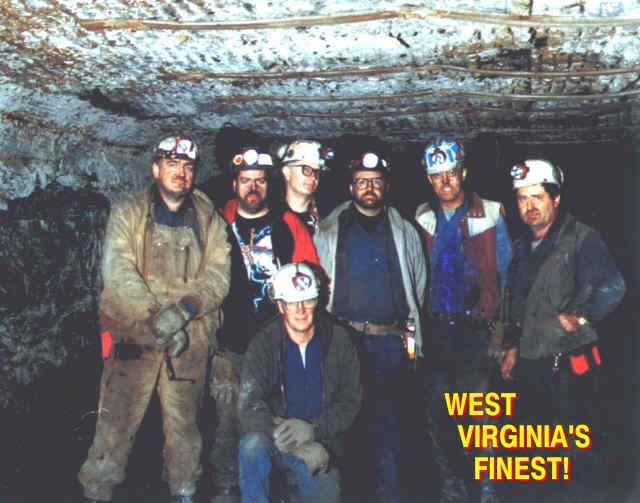
You often hear propaganda to the effect that those who own and invest capital take risks with that capital, and thus deserve the extravagant rewards to the tune of millions and millions of dollars.  The worker on the other hand risks nothing and supposedly gets a fair wage for his day of labor.  This is of course bullshit, and nowhere is this so starkly clear than in the case of Don Blankenship of Massey Energy who was overlord to the deaths of at least 29 coal miners.  And these deaths were do to the Blankenship's purposeful attempt to dodge safety regulations.  From the Pro-Publica web site: 


The company poses a particular challenge to regulators. The Washington Post reported this week that for years the company managed to strike deals and get passes from regulators:
Massey's approach to federal regulation has been notable for two tactics that, according to critics, allow the company to thwart or skirt safety requirements. First, Massey has persuaded regulators to forgo safety rules on a case-by-case basis. Second, the company routinely contests federal citations in a manner that makes it virtually impossible for the government to force quick safety overhauls in the nation's most hazardous mines.
Under Blankenship, Massey had mastered the art of the regulatory waiver, a way to legally circumvent federal mining laws. The MSHA has approved 30 petitions from Massey to operate its mines outside of safety mandates, more than for any other company. Most were in the past decade.

As for the rewards, Blankenship gets to retire with a 12 million dollar severance, and I am sure that is already on top of the millions he already has.  As for the salt of the earth coal miners, the ones still alive get black lung, future unemployment in a degraded environment, and likely an early death.  Lets not forget who really takes the risks with life and health.